
Impact

Publication
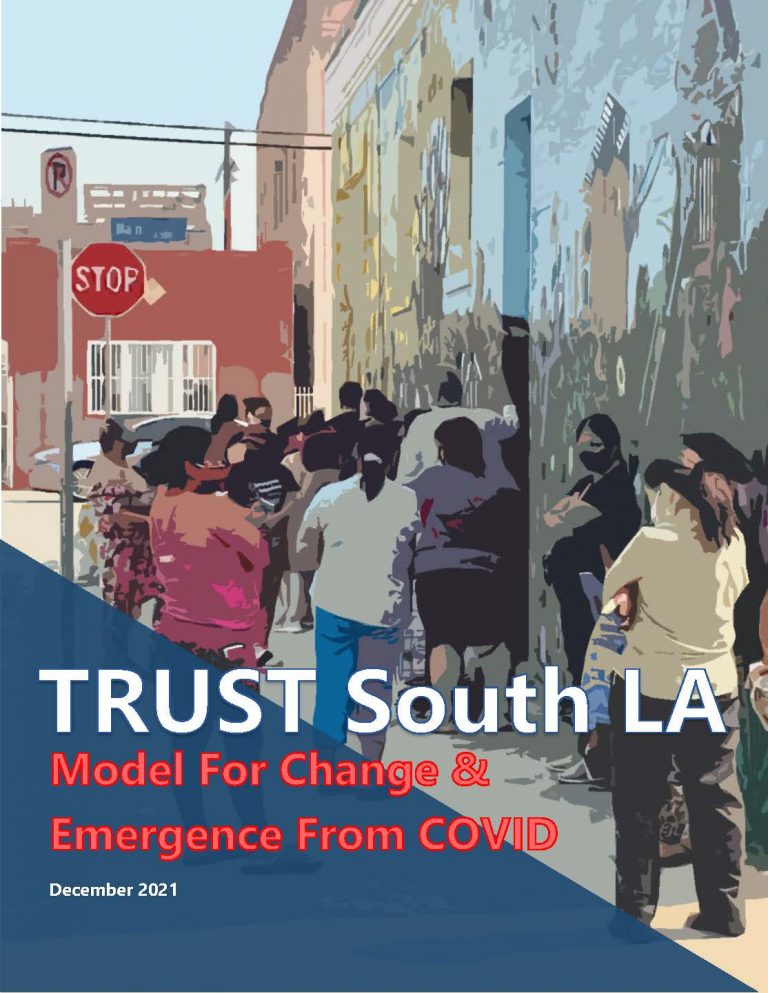
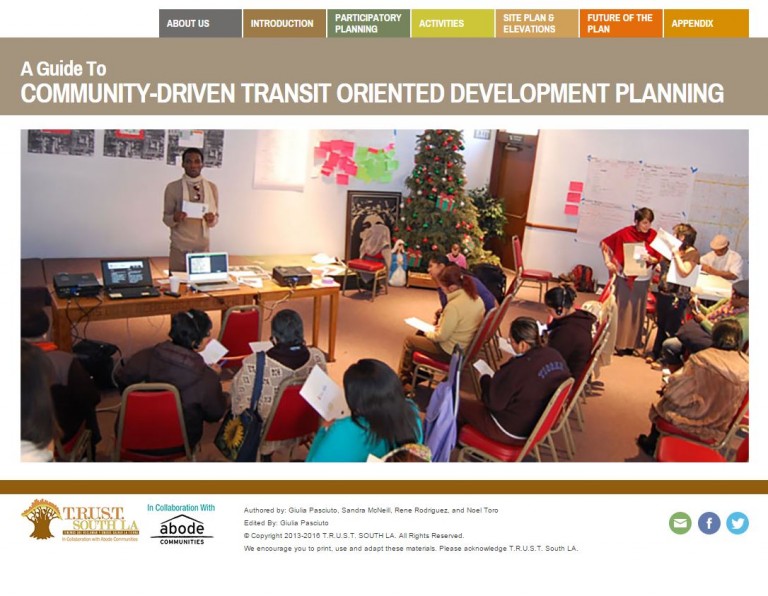
Increasing Community Power and Health Through Movement-Driven Community Land Trusts for strategies to build scale and impact of grassroots CLTs during post-COVID recovery.
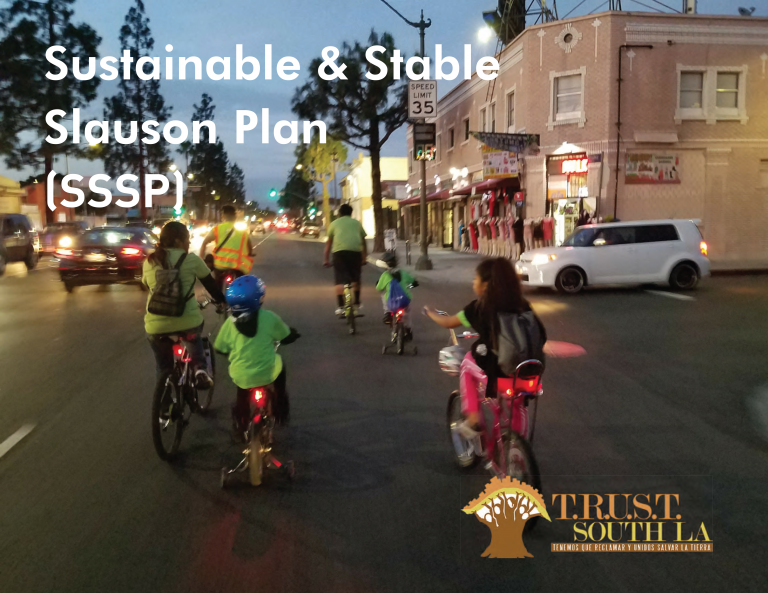
Transformative Climate Communities Report: prepared for the South Los Angeles Climate Commons
media
April 4, 2018
Organizing and the Community Land Trust Model
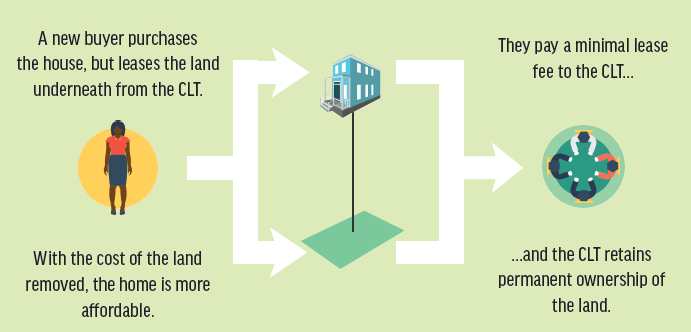
As housing costs soar in urban markets, activists are increasingly turning to Community Land Trusts (CLTs) as a tool for promoting housing equity and preventing displacement. CLTs ensure community control over land, maintaining affordability for low-income residents by separating land ownership from homeownership. This model keeps homes affordable across generations, offering both stability and stewardship.
One notable example of this approach is TRUST South LA, a community-driven organization deeply involved in organizing for housing justice. Like other CLTs, TRUST South LA partners with developers to create affordable housing, while continuing its core mission of empowering residents. They strike a delicate balance between organizing and development, staying active in coalitions and community engagement to ensure affordable housing while retaining a voice in policy discussions.
By focusing on partnership-based development, organizations like TRUST South LA avoid overextending themselves into the complex and resource-intensive realm of real estate, allowing them to continue advocating for community-driven change. Their work highlights how CLTs, when rooted in strong organizing traditions, can be a powerful tool in creating sustainable, inclusive communities.
November 7, 2019
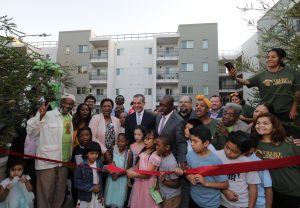
Celebrating Rolland Curtis Gardens: A Grand Opening
TRUST South LA, as a community land trust (CLT), played a crucial role in preserving affordable housing at Rolland Curtis Gardens, preventing the displacement of low-income residents facing gentrification near USC and the Expo Line. In 2011, when tenants were given 60-day eviction notices to make way for market-rate student housing, TRUST South LA intervened, organizing residents to fight for their homes. By partnering with Abode Communities, they transformed the deteriorating 48-unit complex into 140 affordable housing units, ensuring long-term affordability and community stability.
TRUST South LA’s stewardship ensured that the land remains dedicated to affordable housing, providing a model for combating displacement and gentrification. This partnership also empowered residents, many of whom were actively involved in the development process, and led to additional community benefits like an on-site health clinic and a future local market. By keeping the property in a community land trust, TRUST South LA guarantees that future generations will have access to affordable homes in South LA.
Through its community land trust model, TRUST South LA ensures long-term housing affordability while building the capacity of residents to fight displacement and gentrification, offering a path to stability for Black and Brown families in South LA.
October 14, 2020
LISC LA Launches the South LA Economic Inclusion Implementation Plan!
The Watts Rebellion in 1965 and the Los Angeles Uprising in 1992 originated in South LA, but the 2020 uprisings sparked by George Floyd’s murder highlighted the long-ignored frustrations of Black and Latinx residents. In this context, LISC LA introduced the South LA Economic Inclusion Implementation Plan, a locally developed strategy to empower communities while addressing barriers to economic mobility.
T.R.U.S.T. South LA is a critical partner in this initiative, alongside other local organizations, focusing on community-led strategies for economic inclusion. The plan emphasizes COVID-19 relief activities and the role of grassroots organizations in demanding equitable resource allocation, including the reallocation of budgets for police to community services.
Recognized by the Brookings Institute, the plan’s creation was a collaborative effort led by local leaders, highlighting the knowledge and labor of community members in driving long-term change. The recommendations outlined in the South LA Economic Inclusion Implementation Plan aim to leverage South LA’s strengths, combat institutional oppression, and create accessible economic opportunities for all residents, with T.R.U.S.T. South LA at the forefront of these efforts.
October 28, 2020
Homelessness and Food Deserts in Los Angeles
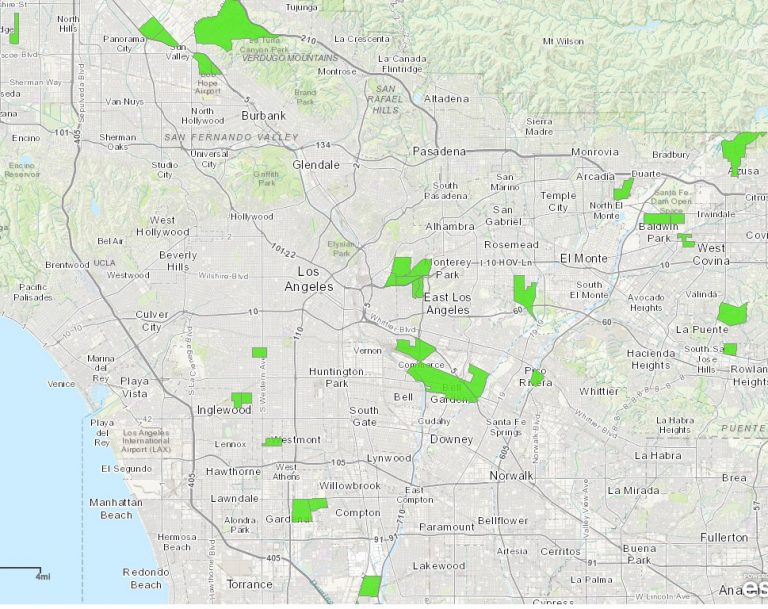
Homelessness and food accessibility remain critical issues in Los Angeles, where over 41,000 people are currently homeless—a 14% increase from the previous year. Notably, Black individuals represent 34% of the homeless population despite comprising only 8% of the county’s total population, highlighting systemic inequalities in access to resources like food, housing, and education.
The Catholic Campaign for Human Development (CCHD) has been addressing these root causes of poverty for 50 years, focusing on food inequality and homelessness. Food deserts—areas where residents lack access to affordable, healthy food—exacerbate health issues and contribute to the cycle of poverty. The overlap between homelessness and food insecurity is significant, as homeless individuals often live in food deserts and face limited access to nutritious food.
Several organizations work with the CCHD to combat these issues:
– POWER (People Organized for Westside Renewal) focuses on empowering residents in low-income communities to advocate for housing rights, clean environments, and healthy neighborhoods.
– TRUST South LA emphasizes affordable housing and food access, providing resources and free meal distributions during the pandemic to support families affected by rising costs and displacement.
– One LA IAF is a coalition that advocates for various social issues, including housing security and access to healthcare.
April 19, 2021
The New Rolland Curtis Gardens Preserves and Expands Transit-Adjacent Affordable Housing in Los Angeles
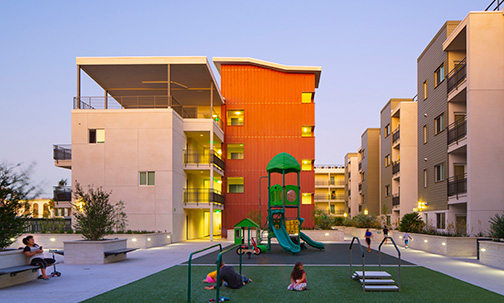
Rolland Curtis Gardens opened in Spring 2019 in Los Angeles’ Exposition Park, featuring 140 residential units and 8,000 square feet of commercial space, including a health clinic and local market. Developed by Abode Communities in partnership with T.R.U.S.T. South Los Angeles, this transit-oriented development (TOD) is located steps from the Expo/Vermont Metro station.
Community-Centric Design
The development offers 138 affordable units for families earning 30% to 60% of the area median income, with rents ranging from $633 to $1,757. Community input shaped renovations, leading to amenities like a playground, community garden, and resident services center focused on training and healthcare.
Financial and Historical Context
Exposition Park, established in 1872, is home to cultural landmarks and recreational facilities, including the Los Angeles Memorial Coliseum. The project secured $81.6 million in financing through low-income housing tax credits and grants.
Quality of Life Improvements
As a TOD, Rolland Curtis Gardens promotes living near public transport, reducing transportation costs and environmental impact. It encourages biking and walking, contributing to a healthier community.
October 28, 2022
California Awards $96 Million for Climate Projects in 10 Frontline Communities
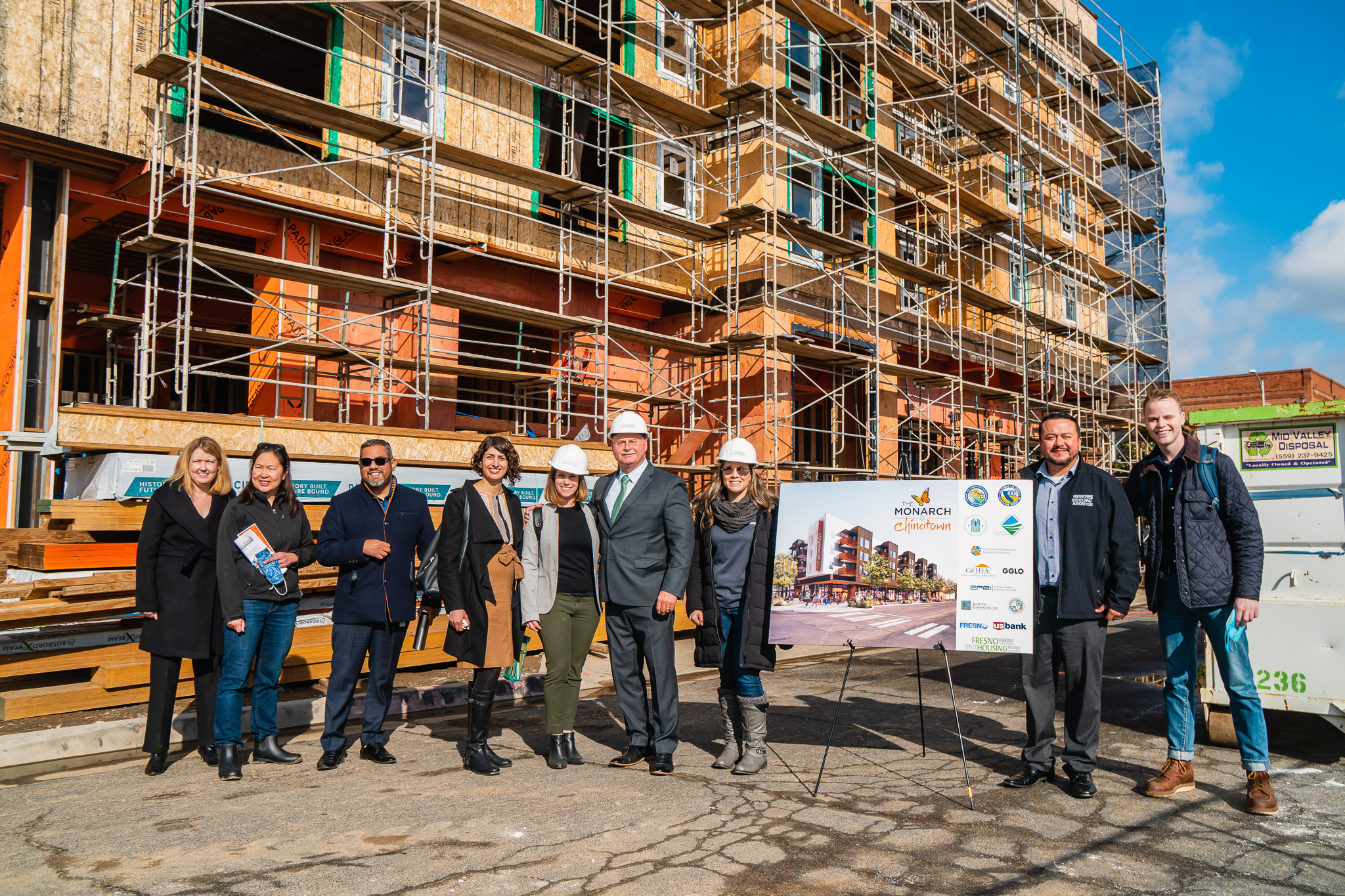
The State of California has allocated $661 million to the Transformative Climate Communities (TCC) program since 2016 to support community-led climate initiatives. Recently, $96.2 million in grants was approved for ten disadvantaged communities, including a significant $35 million awarded to the South Los Angeles Eco-Lab, which involves T.R.U.S.T. South LA among its community partners. This funding aims to reduce greenhouse gas emissions, improve public health, and enhance economic opportunities.
Community leaders like Marie Patiño Gutierrez, from Strategic Actions for a Just Economy, highlighted T.R.U.S.T. South LA’s advocacy over nearly a decade for climate investments that consider the needs of local residents. The TCC funding will help address the historical impacts of redlining, which have left South LA facing high pollution levels, insufficient green spaces, and other environmental injustices.
Residents like Brian Jointer emphasize their vision for a healthier South LA, featuring clean air, more parks, and equitable transit access. This funding represents a transformative opportunity for community-led change, with T.R.U.S.T. South LA at the forefront of this initiative, fostering resilience and improving quality of life for residents.
November 12, 2022
Fed up with failed leadership, L.A. voters backed mansion tax to help the homeless. Will it work?
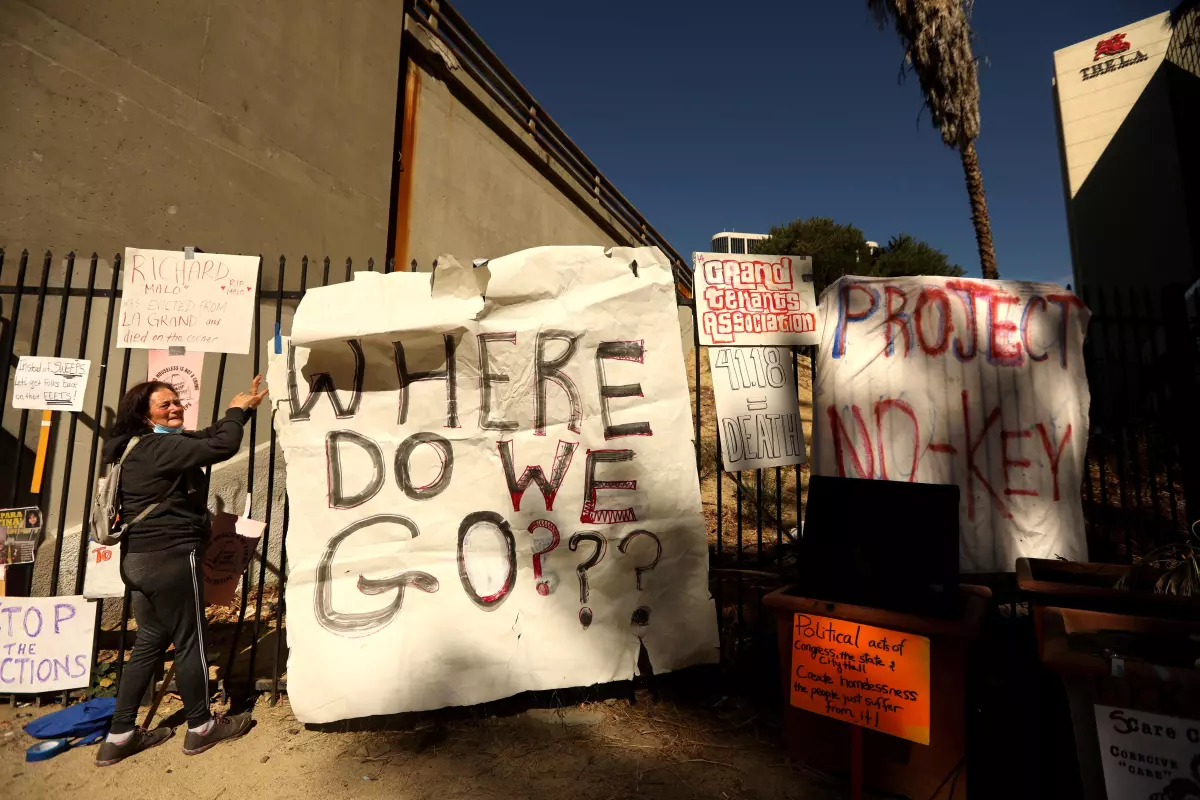
TRUST South LA played a key role in advancing the passage of United to House LA (Measure ULA), which promises to provide $600 million to $1 billion annually for affordable housing and homelessness prevention. Jessica Melendez, policy director at TRUST South LA, led efforts by recruiting and organizing six canvassers who promoted the measure daily. She emphasized how essential ULA would be for working-class communities, particularly for Latinas facing housing insecurity. TRUST South LA’s grassroots efforts were part of a broader coalition pushing for this transformative initiative to tackle Los Angeles’ deep housing crisis.
November 23, 2022
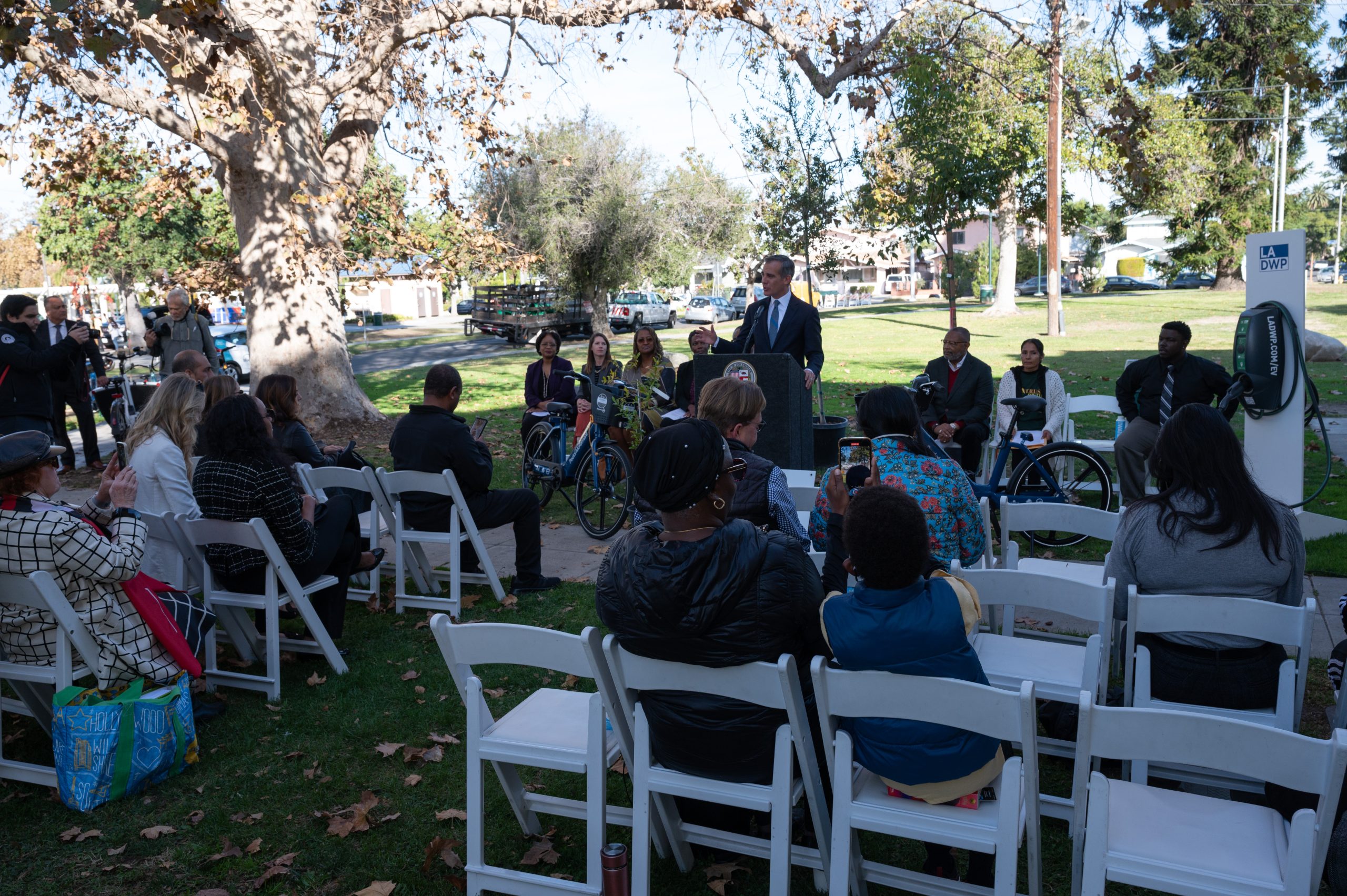
LADOT Celebrates Launch of $60 Million South LA EcoLab Program
A coalition of community organizations, including T.R.U.S.T. South LA, SLATE-Z, CicLAvia, and others, partnered with the City of Los Angeles and LA Metro to secure a $35 million Transformative Climate Communities (TCC) grant. This, along with $24.6 million in additional funding, supports the South LA Eco-Lab, a project aimed at improving environmental conditions, reducing pollution, and promoting economic development in South LA. The initiative focuses on community-driven climate action, addressing poverty, housing burdens, and transportation challenges. The project, set to be completed by 2028, includes infrastructure upgrades like EV car shares, solar installations, street greening, workforce development, and anti-displacement efforts.
December 12, 2022
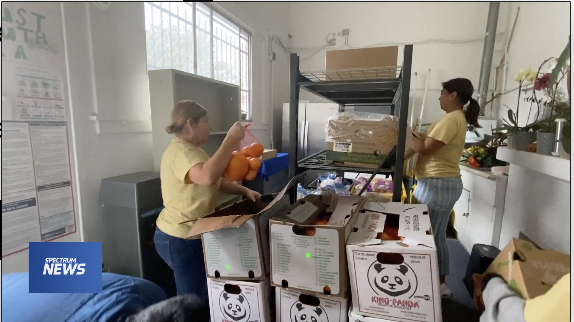
Local orgs fight environmental injustices with new funding
South Los Angeles has faced environmental injustices for generations, but new state funding aims to address these inequities, with TRUST South LA playing a key role. The organization was awarded part of a $35 million state grant for efforts to combat urban heat, air pollution, and environmental racism. TRUST South LA plans to install solar panels, plant thousands of trees to create an urban canopy, and expand its electric car-sharing program, BlueLA, to promote clean mobility in the community.
Lorna Avila, the environmental justice planner for TRUST South LA, and Siris Barrios, the director of social impact and community organizing, are focused on bridging the gap between the community and new resources like electric vehicles. They work directly with residents to educate them about clean transportation and reduce air pollution.

January 17, 2023
City Council Says Proposed South LA Hotel Should Be Used for Affordable Housing
The Los Angeles City Council has vetoed the denial of a permit for a 168-room Marriott Hotel in South LA, sending the proposal back for further review. This project is slated for a vacant city-owned lot near USC, previously the site of the Bethune Library. While supporters argue it will generate jobs, tax revenue, and economic development, community organizations like TRUST South LA are strongly opposed.
Jessica Melendez, the policy director for TRUST South LA, stressed that using public land for a luxury hotel is inappropriate amid a housing crisis and called for prioritizing affordable housing instead. She highlighted that community members have consistently voiced their opposition to the hotel, asserting it would exacerbate gentrification and displace local residents. Glafira Lopez, a community organizer with Strategic Actions for a Just Economy, echoed this sentiment, emphasizing that community members have voted against the hotel project.
Councilman Marqueece Harris-Dawson defended the hotel, suggesting it could provide essential jobs and community benefits, but community opposition persists, reflecting a deep concern over the prioritization of corporate development over housing needs in an already vulnerable neighborhood.

June 15, 2023
SLATE-Z’s Zahirah Mann: At the Intersection of Economic Revitalization & Climate Mitigation in South LA
SLATE-Z, founded in 2014, focuses on economic revitalization and environmental sustainability in South Los Angeles, leveraging the development of the Crenshaw (K) Line. After gaining a federal Promise Zone designation in 2016, it became a coalition of over 100 partners dedicated to reducing poverty through jobs, small business, transit, education, and public safety initiatives.
Major projects, like the South LA Eco-Lab, focus on green spaces, transit access, and clean energy, supported by organizations like Metro and TRUST South LA, which play a key role in community land and housing development.
TRUST South LA is a key partner in the South LA Eco-Lab, which is part of SLATE-Z’s broader mission of economic revitalization through climate action. SLATE-Z, the South Los Angeles Transit Empowerment Zone, leads a collective impact effort focused on economic development, environmental sustainability, and community empowerment.

July 12, 2023
It’s Time for Philanthropy to Put Communities in Charge of Their Own Housing and Futures
Housing insecurity is a pressing national crisis, significantly impacting communities across the U.S., including South Los Angeles. With rising rents and the threat of eviction looming over many families, innovative solutions are emerging, such as Community Land Trusts (CLTs). This model, rooted in the civil rights movement, empowers local communities and tenants to take control of housing, shielding them from gentrification and displacement.
TRUST South LA is actively involved in these efforts, emphasizing the importance of community power-building in neighborhoods historically impacted by systemic inequalities. By focusing on affordable housing and tenant control, TRUST South LA aims to combat the effects of gentrification and empower residents to shape their living conditions.
The CLT model not only addresses immediate housing needs but also fosters community engagement and stability. With funding from philanthropic partners and supportive initiatives like Measure ULA, which allocates funds for CLTs in Los Angeles, there is a significant opportunity for expansion. By investing in CLTs, organizations like TRUST South LA can help transform the housing landscape, ensuring that communities have the power to control their resources and futures.

August 29, 2023
As challenges loom, L.A. City Council approves $150 millionin ‘mansion tax’ spending
TRUST South LA was instrumental in advocating for the $150 million spending plan under Measure ULA, ensuring critical funds go toward programs like eviction defense, tenant outreach, and rental assistance. Karely De La Cruz, a civic engagement organizer with TRUST South LA, stressed the importance of legal representation for tenants during evictions, calling housing a fundamental right.
Measure ULA, dubbed the “mansion tax,” aims to address L.A.’s housing crisis by taxing high-value real estate sales, but its implementation faces significant hurdles. While it has raised $55 million so far, this falls short of original projections due to a frozen luxury real estate market, with homeowners either delaying sales or finding tax loopholes.
In addition to economic challenges, ULA faces legal threats, including a court case questioning its constitutionality and a 2024 state ballot measure that could dismantle the tax. Despite these obstacles, the city is pushing forward, planning to fully allocate the initial $150 million to support tenant protections and affordable housing, with organizations like TRUST South LA ensuring the community’s needs are prioritized during this critical time.
October 11, 2023
The LA City Council Approved $150 Million of Spending for “Mansion Taxes”
Los Angeles recently made headlines with its “Mansion Tax,” officially known as Measure ULA, which took effect on April 1, 2023. This measure imposes additional taxes on real estate sales above certain thresholds—4% for sales over $5 million and 5.5% for those above $10 million. Despite initial predictions that the measure would generate $900 million annually, it has raised only about $55 million as of late August, leading to a drop in revenue expectations due to a freeze in the luxury property market.
In late August, the LA City Council approved the allocation of $150 million from the measure, even though the total raised so far is significantly lower. The funds will support various initiatives, including short-term emergency rental assistance, eviction defense, tenant education, and affordable housing production. Notably, $23 million is earmarked for eviction defense, providing much-needed legal representation for tenants.
Karely De La Cruz, Civic Engagement Manager with T.R.U.S.T. South L.A., expressed her enthusiasm for the funding, stating it will allow tenants to be legally represented during evictions, ensuring they have the same legal support as landlords. She emphasized that “housing is a human right.”
Overall, the implementation of Measure ULA and the allocation of its funds represent a significant step toward addressing housing and tenant protection issues in Los Angeles, although challenges remain regarding its effectiveness and the revenue it generates.
April 4, 2024
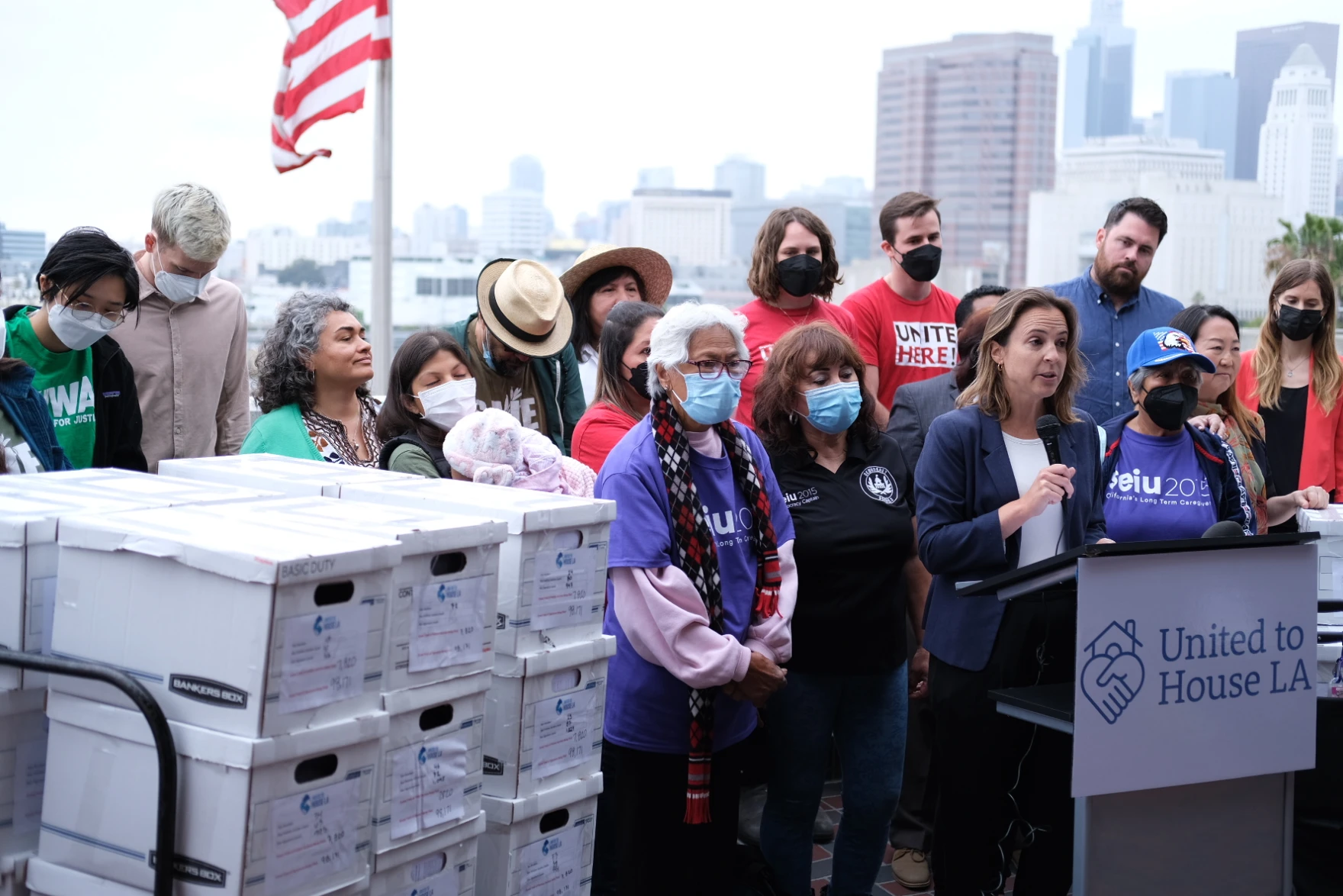
'Mansion Tax': 1 Year In, Revenue Is Way Lower Than Projected But Aid Has Helped Thousands
One year into the implementation of Measure ULA, Los Angeles has generated approximately $215 million from a voter-approved tax on high-priced property sales, far below the anticipated $600 million to $1.1 billion. The measure levies a 4% tax on properties selling for $5 million or more, and 5.5% on those over $10 million. Although some housing experts worry that this “mansion tax” may be hindering new development in a city that needs to plan for nearly half a million new homes by 2029, proponents argue that the revenue has already supported hundreds of proposed affordable housing units and helped thousands avoid eviction through rent relief.
Maria Gonzalez, a South L.A. renter and member of TRUST South LA – a local community land trust that works to preserve affordable housing through community-driven, democratic stewardship of the land – received about $9,300 in emergency rental assistance after falling behind on rent during the pandemic when her husband lost his job. She expressed immense relief upon hearing her application was approved, stating, “I felt like a weight was lifted off my shoulders. I felt like I was floating.” This kind of support underscores the positive impact of Measure ULA on keeping families housed amid financial difficulties.
While supporters of the measure remain optimistic that it will provide ongoing relief for renters and support new affordable housing initiatives, the future of ULA is uncertain. An initiative seeking to require two-thirds voter support for new local taxes has qualified for the November 2024 ballot, posing a potential challenge to ULA. As discussions continue, the measure’s impact on Los Angeles’s housing landscape remains a critical topic among policymakers and residents alike.

April 12, 2024
A library for bike riders brings 250 e-bikes to South Los Angeles
TRUST South LA significantly promotes transportation accessibility as part of the “South Central Power Up” initiative, which introduced a fleet of 250 e-bikes to South Los Angeles. As a partner in the project, TRUST South LA collaborates with community organizations like People for Mobility Justice to address transportation challenges faced by low-income residents. TRUST South LA’s focus on equitable mobility extends from its broader mission of supporting working-class communities, ensuring that programs like this e-bike lending library provide affordable and sustainable alternatives to car travel while reducing pollution and congestion.

May 15, 2024
Housing, Mental Health Advocates Push for November Ballot Measure Would repeal, replace Measure H
A coalition of over 80 housing and mental health advocates has submitted more than 410,000 signatures to the Los Angeles County Registrar-Recorder/County Clerk’s office, aiming to place the Affordable Housing, Homelessness Solutions and Prevention Now initiative on the November ballot. This measure seeks to repeal and replace Measure H, a quarter-cent sales tax approved in 2017, which is set to expire in 2027 unless renewed. The new initiative proposes increasing the sales tax to a half-cent, potentially generating $1.2 billion annually to address the homelessness crisis.
According to the proposal, 60% of the revenue would fund homelessness services, with an additional 15% allocated to cities based on the annual point-in-time count. The L.A. County Affordable Housing Solutions Agency, created last year to oversee homeless solutions, would receive 35.75% of the funds.
Jessica Melendez, director of policy for T.R.U.S.T. South L.A., highlighted the measure’s potential impact, stating, “Homelessness is the most extreme manifestation of poverty and community displacement. We won’t be able to address homelessness unless we do a much better job of helping keep those homes that folks already have.” She believes this initiative surpasses previous efforts in preventing homelessness before it occurs.

August 2, 2024
‘Taking it off the speculative market’: These nonprofits help tenants afford to stay put
Nine years ago, tenants of Pigeon Palace in San Francisco faced the risk of eviction due to an impending building auction. Fearing rent hikes, they raised $300,000 and partnered with the San Francisco Community Land Trust to purchase the property for over $3 million. This allowed tenants to remain at affordable rates, and the building became a model of community land trust (CLT) success.
Jessica Melendez, director of policy for TRUST South LA, emphasizes the importance of this model. CLTs, which buy land and ensure it remains for low-income housing, have tripled in California since 2014. They are a growing tool to preserve affordable housing and fight gentrification. TRUST South L.A., for example, recently bought two multi-unit buildings in gentrifying South LA and aims to convert them into cooperatives to empower the residents. They also own Rolland Curtis Gardens, a 140-unit complex that was saved from becoming market-rate housing. Melendez believes that CLTs can help close the homeownership gap, especially for Black and brown communities facing barriers to entry.
Despite challenges such as capital limitations and a recently scrapped state funding program, CLTs remain a powerful solution to stabilize communities by keeping housing affordable and out of the speculative market. They offer a collaborative model where tenants and small landlords can work together, ensuring future generations benefit from affordable homes.
Interviews
October 19, 2021
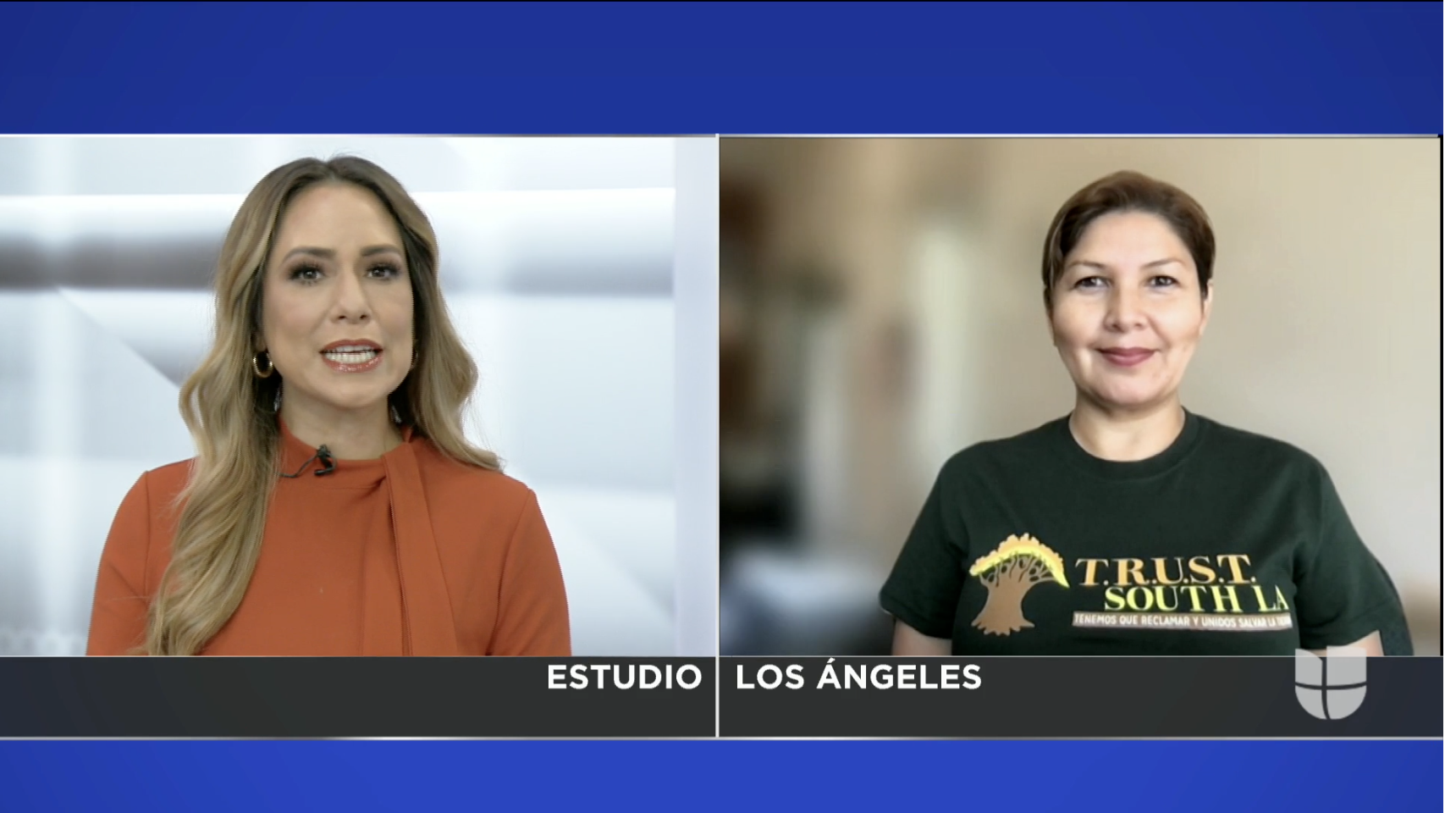
Univision Noticias Interview with Siris Barrios: ¿Aplicaste a la ayuda para la renta 'Housing Is Key'? Te contamos cómo saber en qué va tu solicitud
In an interview with Univision News, Siris Barrios, Director of Social Impact and Community Organizing at TRUST South LA, explained the process for checking the status of financial assistance applications for rent payments. There are five stages in the application process:
- Application in Progress: The application has been submitted.
- Application Under Review: Eligibility is being verified.
- Missing Information: Additional documents are needed.
- Pending Owner Approval: Waiting for the landlord’s participation decision.
- Quality Control: Final checks before approval.
Barrios noted that the time from application submission to approval can vary from 15 days to two months, depending on the completeness of the application. Once approved, individuals can apply for assistance for additional months. Applicants are encouraged to regularly check their emails and call the support center or local office for updates.
November 9, 2021
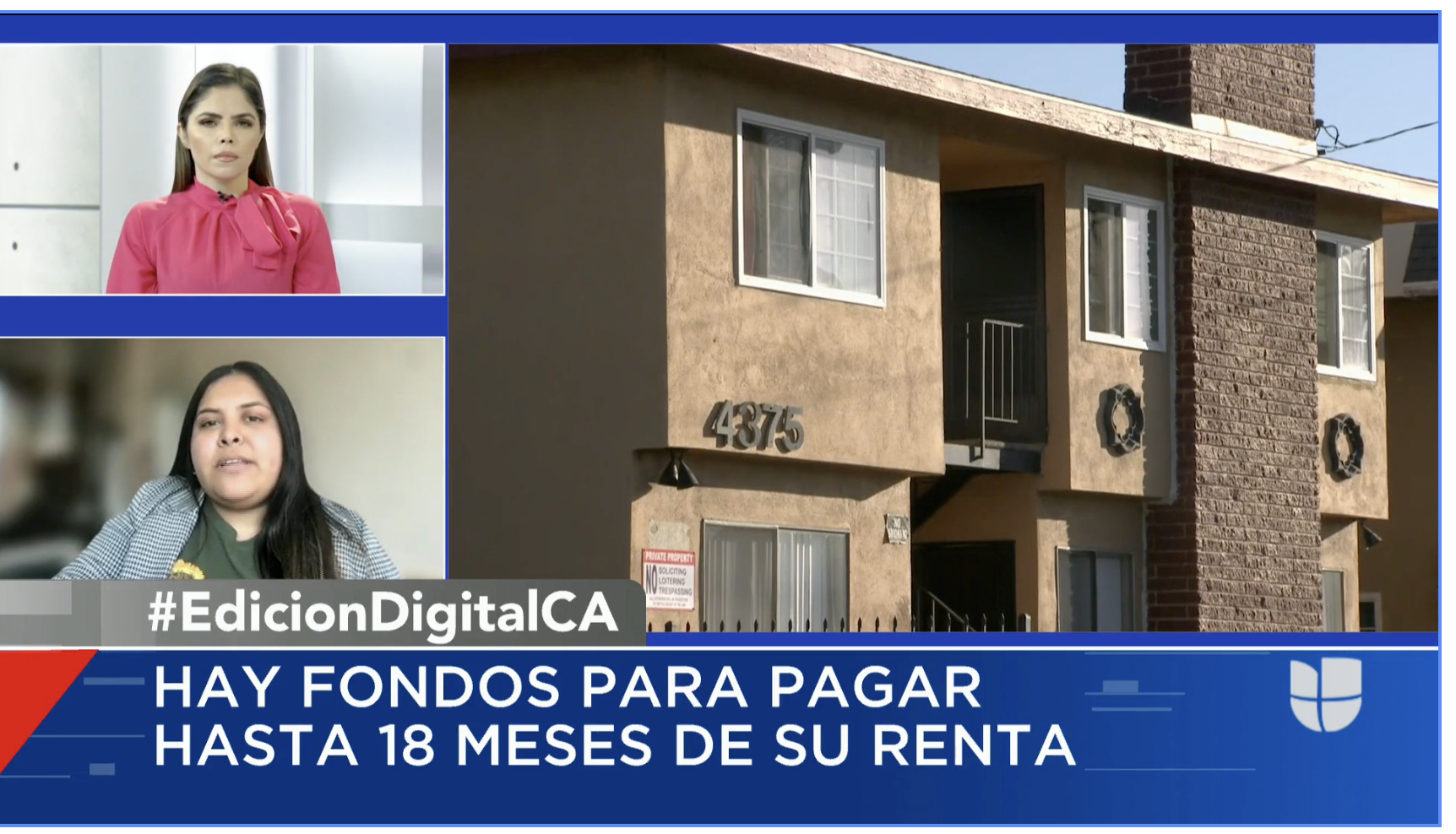
Univision Noticias Interview with Karely De La Cruz: ¿Cómo funciona la ayuda en California para el pago por adelantado de la renta? Te contamos
In this interview with Univision News, Karely De La Cruz, Civic Engagement Manager at TRUST South LA, discussed California’s emergency rental assistance program that allows tenants facing financial difficulties to receive up to three months of rent paid in advance. Key points include:
– The program is open to California residents, both tenants and landlords.
– Tenants do not need to be behind on rent to qualify; they only need to demonstrate that they have been financially impacted by health-related issues.
– There is no set deadline for applications; they will be accepted until funding is exhausted.
– Individuals who previously received assistance may apply for additional funds if eligible.
Latest Post
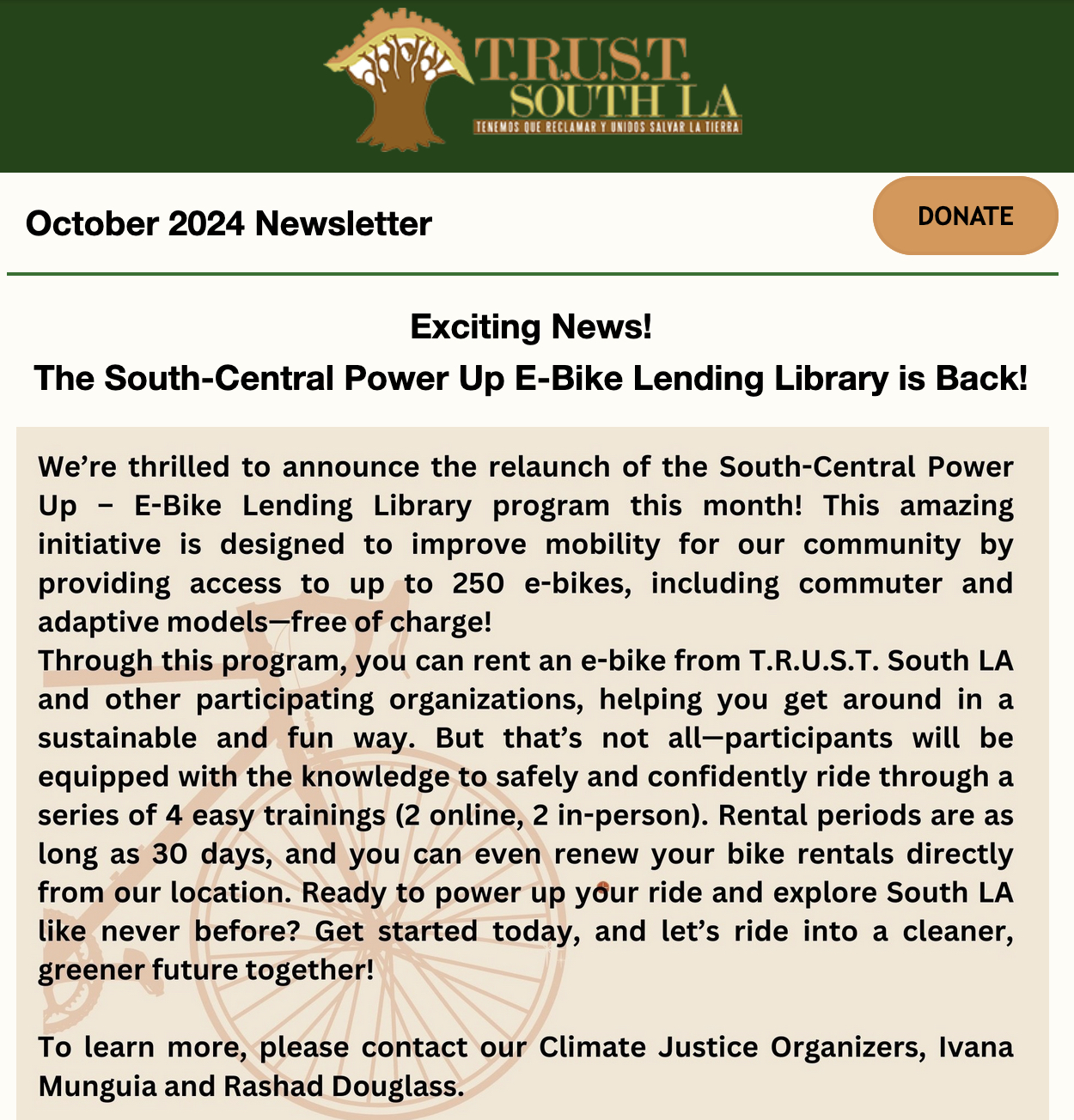
Exciting News! The South-Central Power Up E-Bike Lending Library is Back!
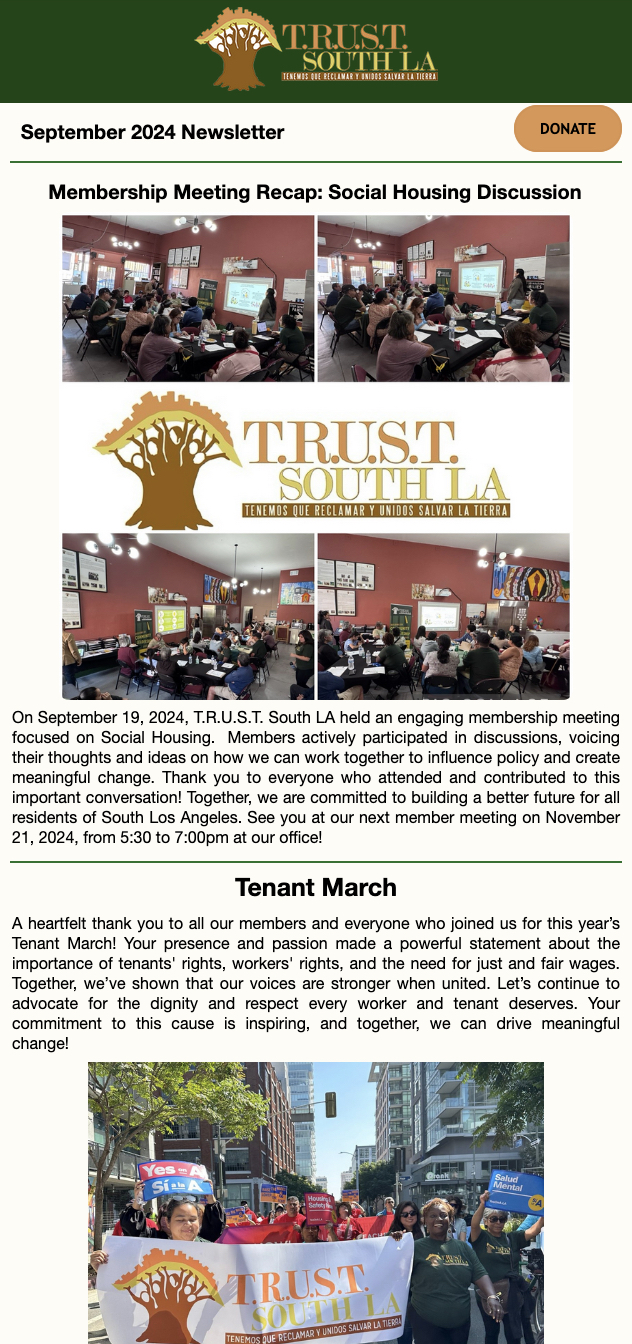
Membership Meeting Recap: Social Housing Discussion
November 12, 2022
Fed up with failed leadership, L.A. voters backed mansion tax to help the homeless. Will it work?
TRUST South LA played a key role in advancing the passage of United to House LA (Measure ULA), which promises to provide $600 million to $1 billion annually for affordable housing and homelessness prevention. Jessica Melendez, policy director at TRUST South LA, led efforts by recruiting and organizing six canvassers who promoted the measure daily. She emphasized how essential ULA would be for working-class communities, particularly for Latinas facing housing insecurity. TRUST South LA’s grassroots efforts were part of a broader coalition pushing for this transformative initiative to tackle Los Angeles’ deep housing crisis.